
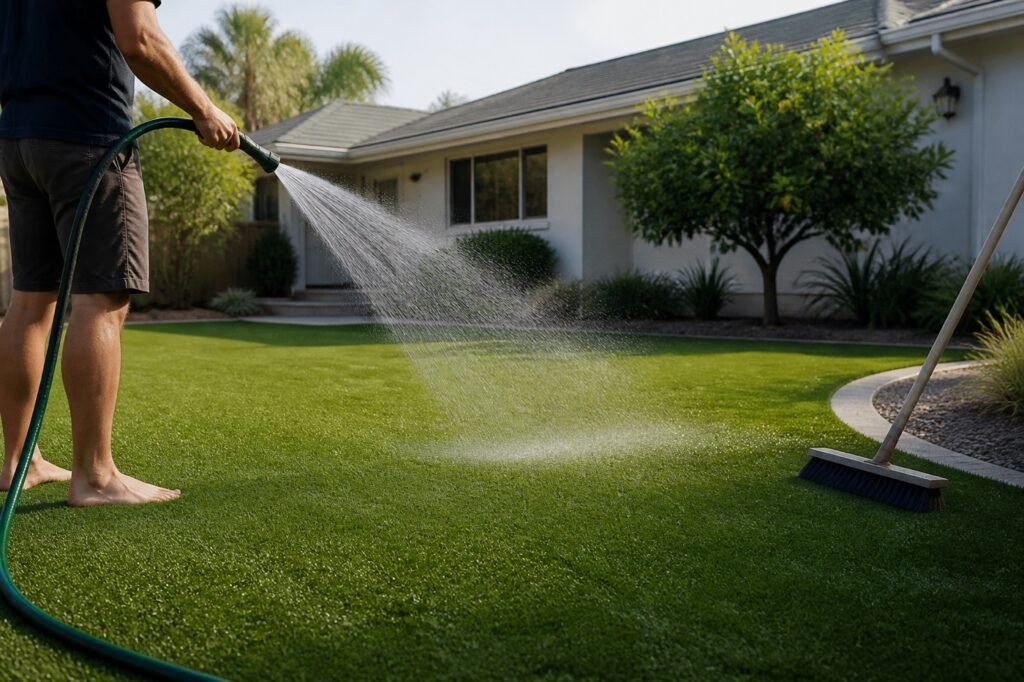
To clean artificial turf, pick up debris, rinse the whole lawn with a garden hose, and brush the fibers against the grain with a stiff, non-metal broom. For pet areas, rinse weekly and treat the spot with an enzyme turf cleaner, because the smell comes from urine that collects under the turf, not on top of it.
That routine takes about 15 minutes a week for a typical Los Angeles yard. The rest of this guide covers what to clean with, what to avoid, how to get rid of dog urine smell, and a simple schedule you can follow. Option 1 Builders installs artificial turf in Los Angeles from our office in Encino, and these are the same care steps we give every homeowner when a job is finished.
How to Clean Artificial Turf: The Weekly Routine
If you want to learn how to clean artificial grass without damaging it, start here. Most artificial grass only needs light, regular care, and the same steps work on any synthetic turf or artificial lawn. Dust, pollen, leaves, and pet waste are the main problems in Southern California, where months can pass without rain to wash the yard for you.
- Clear debris. Pick up leaves, twigs, and solid pet waste. A leaf blower on a low setting or a plastic leaf rake works well. Leaves left on turf break down and give weeds a place to grow on top of the backing.
- Rinse with a hose. Spray the whole lawn with plain water. This moves dust and pollen down through the drainage holes and cools the surface on hot days.
- Brush against the grain. Sweep with a stiff synthetic-bristle broom or a power broom made for turf. Brushing the fibers lifts each flattened blade back upright and spreads the infill evenly, which is what keeps it looking like natural grass. Never use a metal rake or wire brush, which can pull fibers and tear seams.
- Spot-treat where needed. Pet areas, spills, and sticky spots get their own treatment, covered below.
Cleaning Solution Guide: What to Use to Clean Artificial Grass
Here is what is safe, what to use with care, and what to keep off your turf. When in doubt, check the care sheet from your turf manufacturer, since backing and fiber types differ.
| Cleaner | Use it for | Safe on turf? |
|---|---|---|
| Plain water | Dust, pollen, weekly rinse, cooling | Yes |
| Enzyme turf cleaner | Dog urine smell, pet areas | Yes, made for this job |
| Mild dish soap, diluted | Food spills, sticky spots | Yes in small amounts; rinse well so no residue is left |
| White vinegar and water, equal parts | Light odor, mild stains | Yes as a spot treatment; rinse after |
| Bleach or strong solvents | Avoid | Not recommended. Some guides suggest a diluted bleach solution (1 part bleach to 10 parts water) to disinfect, but bleach can fade fibers; an enzyme cleaner is the safer choice |
| Pressure washer at close range | Nothing | No. High pressure can push out infill and damage seams |
Can you use Dawn dish soap on artificial turf? Yes, a small amount mixed into a bucket of warm water is fine for a spill. Heavy soap use is the problem: it leaves a slippery film that attracts dirt if you do not rinse it all the way out.
How to Remove Dog Urine Smell From Artificial Grass
Dog urine smell is the most common turf complaint we hear in the San Fernando Valley, and in hot weather it gets worse fast. The reason is simple: urine runs through the fibers and dries between the bottom of the turf and the base. As Simple Green's turf cleaning guide explains, the buildup sits under the grass, so sprays that only mask odor on top do not last.
- Rinse pet areas often. In summer, a quick daily or every-other-day rinse of the spot your dog uses keeps urine from building up.
- Use an enzyme cleaner weekly. Enzymes and live bacteria break down the uric acid that causes the ammonia smell. Apply at dawn or dusk so it stays damp longer and keeps working.
- Scrub stubborn spots. Work the cleaner in with a brush and let it sit about 10 minutes before rinsing.
- Check your infill. Some infills are made for pet areas and hold less odor. If your yard was installed with plain sand, a pet-rated infill can help.
- Look at the base. If the smell comes back within days of cleaning, the base may not be draining. That is an installation problem, not a cleaning one.
Will dog urine ruin artificial turf? It will not damage the fibers the way it burns real grass, but a yard with poor drainage will keep smelling. That is why we build pet yards with a permeable base and a drainage layer. Our page on pet turf installation in Los Angeles explains how that system works, and our guide to artificial turf for dogs covers the daily routine in more detail.
How to Clean Specific Messes on Artificial Turf
| Mess | What to do |
|---|---|
| Dog poop | Let it firm up, pick it up, then rinse the spot and use enzyme cleaner if it smells. |
| Food or drink spills | Blot, then wash with diluted mild soap and rinse well. |
| Gum or tree sap | Harden it with an ice cube, then lift it off with a plastic scraper. |
| Grease or oil | Blot with paper towels, then a mild soap wash and rinse. |
| Leaves and seed pods | Blow or rake them off weekly, especially under trees. |
| Weeds at the edges | Pull them by hand. They usually root in debris on top, not through the base. |
Artificial Turf Maintenance Tips and Schedule
Use these maintenance tips as a simple artificial turf maintenance plan for a Los Angeles yard. Regular care keeps the turf fresh and adds years to its lifespan, especially in areas with heavy use.
| How often | Task |
|---|---|
| Weekly | Clear debris, rinse, brush high-traffic areas |
| Weekly (pet yards) | Enzyme treatment on pet spots; rinse more often in summer |
| Monthly | Full brush against the grain; check edges and seams |
| Every 1–2 years | Deep cleaning: power brush the whole lawn, remove dust, and add more infill where it has thinned |
| After a heat wave or Santa Ana winds | Blow off dust and debris, rinse the whole yard |
How to Remove Stains From Artificial Grass
Most stains wash out of synthetic turf because the fiber is a plastic that does not absorb color the way a carpet does. Act quickly, blot instead of rubbing, and rinse thoroughly when you finish.
| Stain | How to remove it |
|---|---|
| Minor stains (coffee, juice, mustard, ketchup) | Mix a cleaning solution of warm water and a little mild detergent, wipe with a sponge mop or cloth, then rinse. |
| Tar, motor oil, or grease | Dab a small amount of mineral spirits on a cloth, wipe only the stain, then rinse with water. Petroleum-based solvents can damage the backing if they soak in, so use as little as possible. |
| Nail polish or lipstick | Wipe with a little acetone-free nail polish remover on a cloth, then rinse. |
| Latex paint | Wash it out with soap and water while it is still wet. Dried paint can be scraped off the blade tips gently. |
| Candle wax or crayon | Freeze it with ice, then lift it off with a plastic scraper. |
| Blood or urine | Rinse with cold water, then treat with an enzyme cleaner. |
Whatever you use, test it first on a hidden spot, and never use a substance with a heat or coating warning near the turf. Turf fibers have a low melting point, so heat-based stain removal is off the table.
What Ruins Artificial Turf?
Most turf damage we see in Encino and across Los Angeles comes from heat and sharp objects, not from normal use.
- Heat sources: grills, fire pits, cigarettes, and fireworks can melt fibers in seconds.
- Reflected sunlight: low-E windows on a neighbor's house can focus sunlight and melt streaks into the turf.
- Metal tools: metal rakes, shovels, and wire brushes snag fibers and open seams.
- Harsh chemicals: bleach, solvents, and some weed killers can fade or weaken the turf.
- Heavy furniture left in one spot: it can crush fibers. Move patio furniture now and then and brush the area.
- Debris left to accumulate: leaves and dust trap moisture and give weeds a place to start.
Does Rinsing Cool Down Artificial Turf?
Yes, for a while. Turf in direct sun gets much hotter than real grass. A 2024 systematic review of synthetic grass surfaces includes field studies where turf in the sun averaged about 57°C (135°F), while the same turf in shade averaged about 32°C (90°F). A quick rinse lowers the surface temperature before kids or pets go out, and shade trees, light turf colors, and cooling infills help in the long run.
Questions About Cleaning Artificial Turf
What is the best cleaner for artificial grass?
Can you use Dawn dish soap on artificial turf?
Does vinegar damage artificial grass?
How often should you clean artificial turf?
Can you pressure wash artificial turf?
Why does my artificial turf still smell after cleaning?
Should you vacuum artificial grass?
Turf Installed to Stay Clean: Option 1 Builders
Option 1 Builders is a licensed California general building contractor (CSLB #1122918) at 16400 Ventura Blvd, Suite 319, Encino, CA 91436. We install artificial turf with a compacted, draining base across Los Angeles County, and every artificial turf installation carries a 15-year warranty. See our artificial grass installation in Encino, read why artificial turf installations fail, or check what artificial turf costs in Los Angeles.
Turf that smells or will not drain? Request a free estimate or call 818-297-2475.