
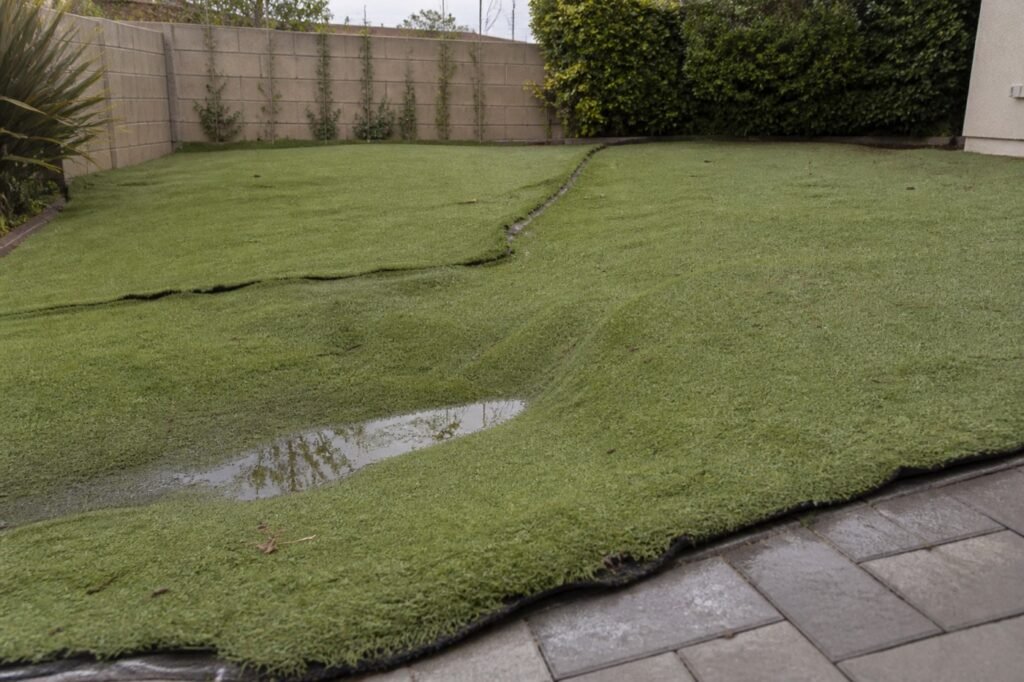
Artificial turf installations fail for five reasons, and none of them is the turf itself: seams that separate, wrinkles and sagging from a base that was never compacted, water that pools because the yard was not graded, weeds that grow in at the edges, and pet odor from a base that does not drain. Every one of them is decided in the first two days of the job, before a single roll of turf is unrolled.
Option 1 Builders installs artificial grass in Encino and across the San Fernando Valley, and a large share of our turf work is replacing lawns that failed within three or four years. This guide walks through each problem, what causes it, what it looks like in a Valley yard, and what a proper installation does to prevent it.
Why Are People Getting Rid of Artificial Grass?
Search that question and you will find two kinds of answers. The first is homeowners who bought a cheap installation: it smelled, it wrinkled, it pooled water, and they ripped it out. The second is people who never wanted plastic in the yard and prefer native planting, which is a fair choice and one we also build. The first group is the one this article is for, because their turf did not fail. Their base did.
A quality turf product installed on a compacted, draining base with real edge restraint lasts 15 to 20 years in Encino heat. The same product on two inches of loose gravel lasts three. Almost every "artificial grass was a mistake" story we hear at walkthroughs comes down to one of the problems below.
Problem 1: Artificial Turf Seams Separating
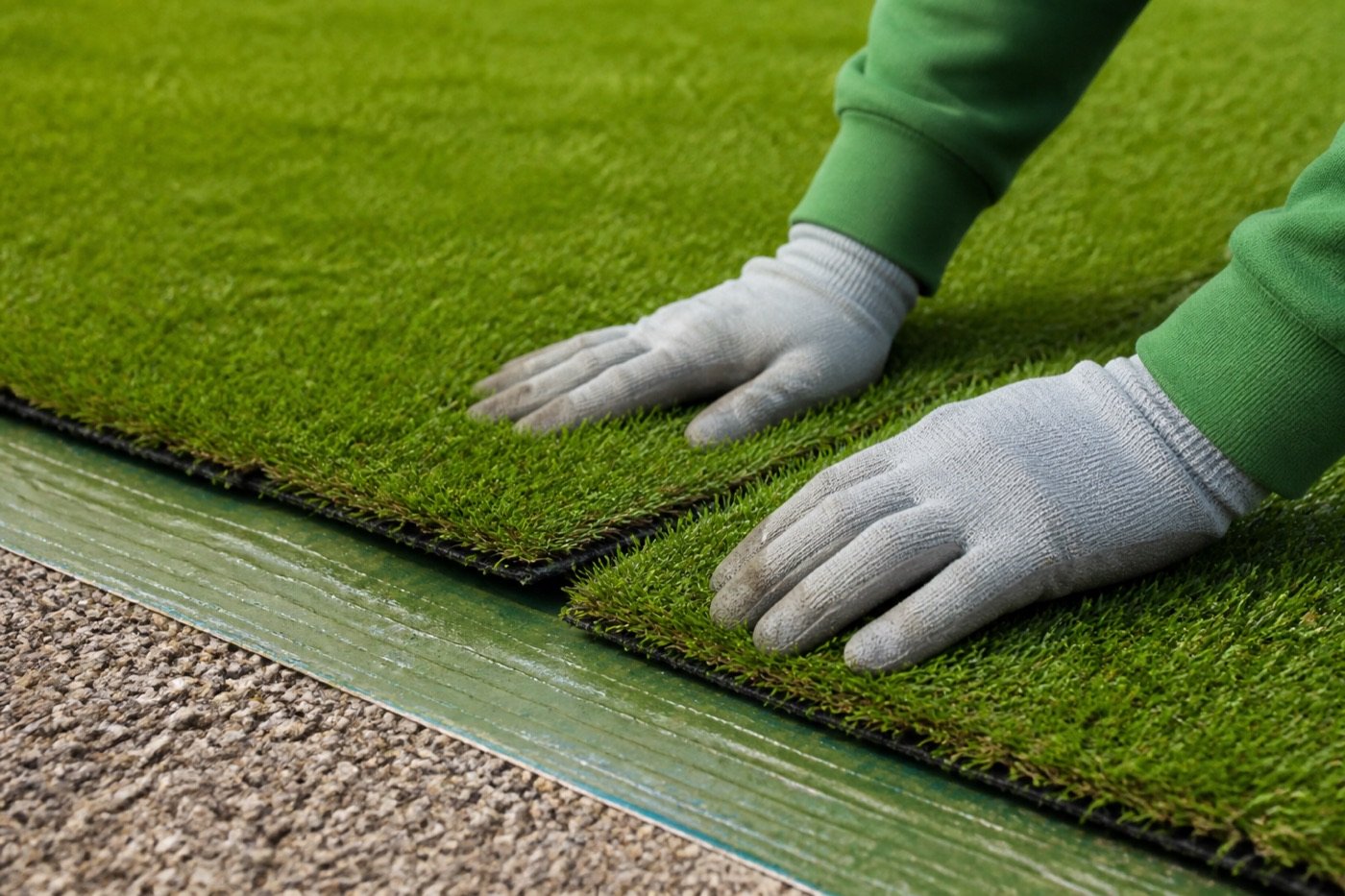
What it looks like: a visible line where two rolls meet, opening wider each summer, sometimes with a ridge where one edge has lifted.
What causes it: seams that were nailed but not glued, seam tape laid on loose base, or rolls installed with the blade direction alternating so the two edges never sit flat against each other. Heat makes it worse. Turf expands on a 100-degree Valley afternoon and contracts at night, and a seam that is not bonded works itself loose.
How to prevent it: every seam is glued to seam tape on a compacted base, pressed, and weighted while it cures. All rolls run in the same direction. Seams are placed away from the highest-traffic path when the yard layout allows it. A seam done this way is invisible and stays that way.
Problem 2: Wrinkles, Sagging, and an Uneven Surface
What it looks like: ripples across the lawn, soft spots that give underfoot, low areas that appear a year after installation.
What causes it: a base that was too thin, was not compacted in lifts, or was laid over soil that was never graded. Sometimes the turf was stretched too tight in cool weather and buckled when it expanded in the heat. Sometimes there was simply no base at all, just turf over old lawn, which is the most common thing we find when we pull up a failed yard.
How to prevent it: a real sub-base of three to four inches of crushed rock, compacted with a plate compactor in two or more lifts, screeded flat, and checked with a level before turf goes down. On sloped Encino lots we grade first so the base is uniform. Turf is laid, relaxed in the sun for an hour so it expands, then stretched and nailed. This is where most of the labor in a quote goes, and it is the labor a cheap bid removes.
Problem 3: Poor Drainage and Pooling Water
What it looks like: water standing on the turf after a rain or a rinse, a spongy feel, algae or a musty smell in the shade.
What causes it: the base was not graded so water could leave, the crushed rock was too fine and packed like concrete, or the turf backing was a cheap product with too few drainage holes. On hillside lots in Encino Hills and Tarzana, runoff from above can also flood a lawn that was built without a drain.
How to prevent it: grade the soil so water moves away from the house, use a base rock that drains, and add yard drains or a French drain tied to the street where the lot needs it. We build drainage as part of every turf job because on Valley slopes it is the part that protects everything else you paid for. Our landscape contractor crew handles the drains, so it is one plan and one crew.
Problem 4: Weeds Growing Through Artificial Turf
What it looks like: weeds at the edges and along seams, sometimes sprouting from the turf surface itself.
What causes it: old lawn and roots left in place under the turf, no weed barrier, or edges that were not restrained so soil migrates in. Weeds that appear on the surface are usually growing in organic debris, such as leaves and dust, that built up in the infill and was never rinsed off.
How to prevent it: full demolition of the existing lawn including roots, a weed barrier under the base where the yard needs it, and bender board or a concrete edge so the turf and the soil stay separated. After that, a rinse and a stiff broom a few times a year keeps debris from building into a seed bed.
Problem 5: Odor, Usually From Pets
What it looks like: a smell of ammonia that gets worse in summer, strongest in the spots your dog favors.
What causes it: urine that cannot drain. Standard turf on a non-draining base holds it in the backing, and Valley heat does the rest.
How to prevent it: a pet system from the start: a fully permeable backing, a draining base with a clean drainage layer, and an antimicrobial infill instead of plain sand. We wrote a full guide to artificial turf for dogs in Encino that covers the rinse routine and the cost.
Two More That Come From the Product, Not the Install
Fading and matting
Turf that turns pale or lies flat within a few years was usually a low face weight product without UV stabilization, or it was installed with too little infill to hold the blades up. In Encino sun, buy the turf grade for the exposure. Cheap turf in full sun is the most expensive turf you can buy, because you will replace it.
Heat
All artificial turf gets hotter than natural grass in direct sun. It is not a defect, but it is a reason some people remove it. Lighter colors, taller pile, shade, and a hose rinse all help, and we will tell you at the walkthrough if your yard is a full-sun yard that needs a cooler product.
Should You Install Artificial Turf Yourself?
You can, on a small flat area with truck access, if you are willing to rent a plate compactor and haul base rock. Most of the failed installations we replace in Encino were not do-it-yourself jobs, though. They were professional installations, and a few DIY turf jobs, that skipped the sub-base work to hit a price. A synthetic grass installer who will not talk about compaction is telling you something. The question to ask any installer is not "how much per square foot" but "how deep is the base, how does water leave the yard, and who is on site each day." We explain why in three questions to ask every Encino bid.
What Option 1 Builders Does Differently
We quote demolition, grading, base, drainage, edge restraint, turf product by name, seaming, and infill as separate lines, so you can see exactly what a cheaper bid left out. Our own installers do every step. The base is compacted in lifts and checked flat. Seams are glued and pressed. Edges are restrained. And every installation carries a 15-year warranty written into the scope. For what a complete job costs, see how much artificial turf installation costs in Los Angeles.
Artificial Turf Problems: Questions Homeowners Ask
What is the most common problem with artificial turf?
Does rain drain through artificial turf?
Can artificial turf seams be repaired?
Why is my artificial grass uneven?
Can you fix a failed turf installation instead of replacing it?
How do I know if a turf quote will avoid these problems?
Why Encino Homeowners Trust Option 1 Builders With a Second Turf Job
Option 1 Builders is a family-owned, licensed California general building contractor (CSLB #1122918) based at 16400 Ventura Blvd in Encino. We have replaced enough failed turf in the San Fernando Valley to know exactly where the first installer cut corners, and we build the base so the second job is the last one. See finished yards on the projects page, read more turf answers, or find out what a cheap turf bid usually leaves out.
Turf already failing? Request a free written estimate or call 818-297-2475. We will pull back a corner, look at the base, and tell you whether it is a repair or a rebuild.